Vocational training in Tailoring and Dress Making was conducted under the Materbari Ultra Super Critical Coal Power Fired Project (RHD Part) in Bodorkhali, Moheshkhali, Cox’s Bazar, benefiting 15 local trainees through skills development supported by JICA, RHD, CCDB, and SSD Academy.
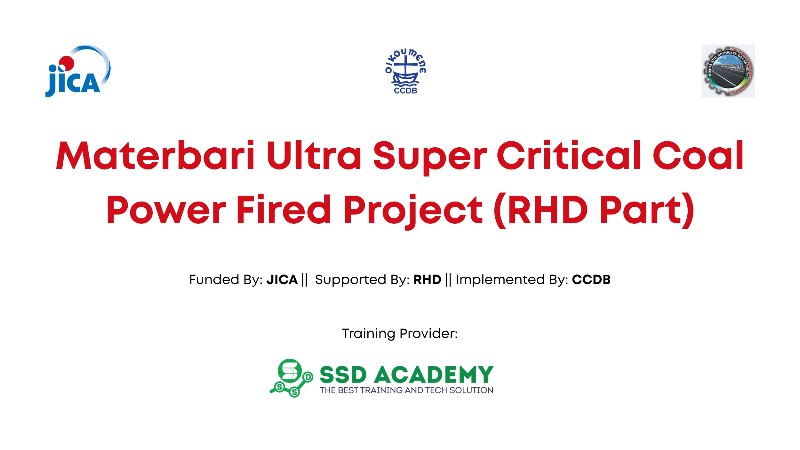
This project provided tailoring and dress making training to 15 community members in Bodorkhali, Moheshkhali, Cox’s Bazar. Funded by JICA, supported by RHD, implemented by CCDB, and delivered by SSD Academy, the program enhanced local livelihoods through vocational skills and employment opportunities.
Project Completion Report
Name of Project: Materbari Ultra Super Critical Coal Power Fired Project (RHD Part)
Project Overview
The Materbari Ultra Super Critical Coal Power Fired Project (RHD Part) is a strategic development initiative aimed at strengthening infrastructure development while simultaneously improving the socio-economic conditions of surrounding communities through skill development programs. As part of the social development and community engagement component of the project, a vocational training initiative was implemented to equip local residents with market-relevant skills.
The training program focused on Tailoring and Dress Making, providing practical vocational education to individuals from the Bodorkhali area of Moheshkhali Upazila in Cox’s Bazar District. The initiative was designed to enhance employment opportunities, promote self-employment, and empower local communities through sustainable livelihood development.
The project was funded by the Japan International Cooperation Agency (JICA), supported by the Department of Roads and Highways (RHD), implemented by Christian Commission for Development in Bangladesh (CCDB), and delivered through the SSD Academy (Step-Up Skill Development Academy).
Project Background
Large-scale infrastructure projects such as the Materbari Ultra Super Critical Coal Power Plant often impact surrounding communities. Recognizing the importance of community development, this project integrated a capacity-building and skill development component to ensure that local residents benefit from economic opportunities generated by the project.
The coastal region of Moheshkhali, Cox’s Bazar, has limited access to vocational training opportunities, particularly for women and economically disadvantaged populations. Many households rely on seasonal income sources, making sustainable livelihood development an urgent priority.
To address these challenges, the project introduced a structured vocational training program in tailoring and dress making, enabling participants to develop practical skills that can be directly applied for income generation, entrepreneurship, or employment in the garment and tailoring sectors.
Project Objectives
General Objective
To improve the economic empowerment and livelihood opportunities of local communities in Moheshkhali through vocational skills development.
Specific Objectives
To provide hands-on training in tailoring and dress making to local residents.
To enhance employment and self-employment opportunities through practical vocational skills.
To empower community members, particularly women, through income-generating activities.
To strengthen community resilience by promoting sustainable livelihood development.
To support the social development component of the Materbari Power Project by investing in community skill development.
Project Implementation
Implementing Organization
The project was implemented by Christian Commission for Development in Bangladesh (CCDB), an organization with extensive experience in community development, vocational training, and livelihood enhancement programs.
Training Provider
The training sessions were conducted by SSD Academy (Step-Up Skill Development Academy), a professional training institution specializing in skill development and vocational education.
Funding and Support
The initiative received financial support from Japan International Cooperation Agency (JICA) and institutional support from the Department of Roads and Highways (RHD).
These organizations collaboratively ensured that the project maintained high standards of quality training and effective community engagement.
Training Details
The training program focused on developing both technical tailoring skills and entrepreneurial knowledge, enabling participants to establish small businesses or pursue employment opportunities.
Training Curriculum
The Tailoring and Dress Making training program included both theoretical and practical components designed to develop comprehensive vocational skills.
Key Training Modules
Basic Tailoring Skills
Introduction to sewing tools and equipment
Machine operation and maintenance
Fabric types and material selection
Garment Construction
Measurement techniques
Pattern making and cutting
Stitching techniques for different garments
Dress Making Techniques
Designing traditional and modern clothing
Finishing and quality control
Garment fitting and adjustments
Entrepreneurship and Business Skills
Small business management
Pricing and cost calculation
Customer service and marketing
Project Location
The training program was conducted in: Bodorkhali, Moheshkhali Upazila, Cox’s Bazar District, Bangladesh
This location was selected due to its proximity to the Materbari development area and the need to support nearby communities affected by large infrastructure projects.
The area has significant potential for small-scale tailoring businesses, making it an ideal location for vocational training initiatives.
Target Beneficiaries
The project targeted local community members living in and around Bodorkhali, with special emphasis on:
Women seeking income opportunities
Unemployed youth
Individuals from economically disadvantaged households
Residents affected by infrastructure development activities
A total of 15 trainees successfully participated in the program.
Project Outcomes
Skill Development
Participants successfully developed practical skills in tailoring and dress making, enabling them to produce garments independently.
Economic Empowerment
The training provided participants with the capacity to start small tailoring businesses or seek employment in local garment-related work.
Community Impact
The project contributed to local economic development by increasing the availability of skilled labor in the tailoring sector.
Social Empowerment
The program supported women’s empowerment, helping participants gain confidence, financial independence, and decision-making capacity within their households.
Sustainability and Future Opportunities
The sustainability of the project lies in the practical and income-generating nature of tailoring skills. Graduates of the training program can continue using their skills to generate income through:
Establishing home-based tailoring shops
Providing dressmaking services to local communities
Producing garments for local markets
Working in small tailoring enterprises
Future programs may include advanced tailoring training, entrepreneurship support, and access to sewing equipment or microfinance services.
Challenges and Lessons Learned
Challenges
Limited prior vocational exposure among participants
Need for extended training periods for skill mastery
Limited access to sewing equipment after training
Lessons Learned
Hands-on practical training significantly improves skill retention
Community-based training increases participation and accessibility
Follow-up support can improve long-term livelihood outcomes
Conclusion
The Materbari Ultra Super Critical Coal Power Fired Project (RHD Part) Skill Development Initiative successfully provided vocational training in Tailoring and Dress Making to 15 local participants in Bodorkhali, Moheshkhali, Cox’s Bazar.
Through collaboration between JICA, the Department of Roads and Highways, CCDB, and SSD Academy, the project contributed to community empowerment, livelihood development, and local economic growth.