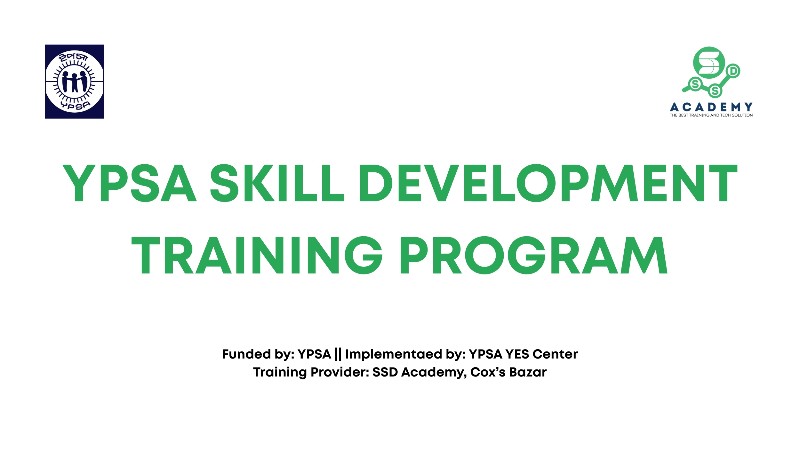
SSD Academy successfully implemented the YPSA Training Program in Ramu, Cox’s Bazar, providing NTVQF Level-01 training in Basic Computer Operation and Electrical House Wiring for 60 youth. The program strengthened technical skills and improved employment and self-employment opportunities.
Under the YPSA Training Program, SSD Academy delivered competency-based NTVQF Level-01 training in Basic Computer Operation (40 trainees) and Electrical House Wiring (20 trainees). Implemented through YPSA YES Center in Ramu, Cox’s Bazar, the initiative empowered youth with practical skills for employment and entrepreneurship.
YPSA Training Program
Completion Report
Basic Computer Operation & Electrical House Wiring (NTVQF Level-01)
Project Overview
SSD Academy (Step-Up Skill Development Academy) successfully implemented the YPSA Training Program in Ramu, Cox’s Bazar, providing competency-based vocational training under the National Technical and Vocational Qualifications Framework (NTVQF Level-01).
The program was funded by YPSA (Young Power in Social Action) and implemented through the YPSA YES Center, with SSD Academy serving as the official training provider.
Through this initiative, 60 youth received professional technical training in two high-demand occupations:
Basic Computer Operation (NTVQF Level-01)
Electrical House Wiring (NTVQF Level-01)
The program aimed to improve technical skills, employability, and entrepreneurship opportunities for youth in Cox’s Bazar.
Project Background
Youth unemployment remains a major challenge in many rural areas of Bangladesh, including Ramu, Cox’s Bazar. Many young people lack access to technical education, digital literacy training, and vocational skills development.
To address this issue, YPSA initiated a vocational training program to equip local youth with practical skills aligned with national occupational standards (NTVQF).
By partnering with SSD Academy, the project ensured high-quality, competency-based training that meets industry demands.
Training in computer skills and electrical house wiring was selected because these occupations offer strong employment and self-employment opportunities in both rural and urban areas.
Project Objectives
General Objective
To enhance technical skills and employment opportunities for youth in Cox’s Bazar through NTVQF-based vocational training programs.
Specific Objectives
Provide competency-based technical training under NTVQF Level-01
Develop practical skills in computer operation and electrical house wiring
Increase employment and entrepreneurship opportunities
Strengthen the local skilled workforce
Project Implementation
Training Courses
Basic Computer Operation (NTVQF Level-01)
The Basic Computer Operation course was designed to improve digital literacy and computer skills among youth.
Course Topics
Introduction to Computer & ICT
Computer Hardware and Software Basics
Operating System Fundamentals
Microsoft Office (Word, Excel, PowerPoint)
Internet Browsing & Email Communication
Data Entry Techniques
File & Folder Management
Basic Computer Troubleshooting
Skills Developed
Participants learned how to:
Operate computers efficiently
Prepare documents and reports
Manage digital files and data
Perform office-based computer tasks
Career Opportunities
Graduates of this course can work as:
Computer Operator
Data Entry Operator
Office Assistant
Computer Lab Assistant
Electrical House Wiring (NTVQF Level-01)
The Electrical House Wiring course focused on providing practical skills for electrical installation, maintenance, and repair.
Course Topics
Basic Electrical Theory
Electrical Safety Practices
Electrical Tools and Equipment
House Wiring Systems
Switch and Socket Installation
Lighting Installation
Electrical Circuit Connections
Electrical Troubleshooting
Practical Skills
Participants received hands-on training in:
Electrical wiring installation
Lighting and circuit installation
Electrical testing
Maintenance and repair work
Career Opportunities
Participants can work as:
Assistant Electrician
House Wiring Technician
Electrical Maintenance Worker
Electrical Repair Technician
Many trainees can also start small electrical service businesses in their communities.
Participant Information
A total of 60 trainees participated in the training program.
Participants were selected from local communities in Ramu, Cox’s Bazar, focusing on youth interested in developing technical skills.
Training Methodology
SSD Academy used a practical, competency-based training approach to ensure effective learning.
Training methods included:
Classroom lectures
Practical demonstrations
Hands-on training sessions
Group discussions
Instructor-led guidance
Practical assessments
This approach helped participants gain both theoretical knowledge and real-world technical skills.
Project Achievements
The YPSA Training Program achieved several key outcomes:
60 youth successfully completed NTVQF Level-01 vocational training
Improved digital literacy and electrical technical skills
Increased confidence and employability of participants
Created opportunities for self-employment
Contributed to the development of a skilled workforce in Cox’s Bazar
Challenges Faced
During project implementation, several challenges were observed:
Some trainees had limited prior technical knowledge
Training duration was limited for advanced skills
Minor logistical challenges during training sessions
Despite these challenges, the project was completed successfully.
Sustainability and Future Impact
The skills gained from this training program will continue to benefit participants in the long term.
Participants may:
Work as computer operators or office assistants
Provide electrical installation and repair services
Start small businesses related to electrical work
Continue advanced technical training
This contributes to sustainable community development and youth empowerment.
Conclusion
The YPSA Training Program successfully delivered NTVQF Level-01 vocational training to youth in Ramu, Cox’s Bazar.
Through the collaboration of YPSA, YPSA YES Center, and SSD Academy, the project provided high-quality training in Basic Computer Operation and Electrical House Wiring.
By equipping participants with practical technical skills, the program has created pathways for employment, entrepreneurship, and long-term economic empowerment.
SSD Academy remains committed to delivering quality vocational training and skill development programs in Bangladesh.